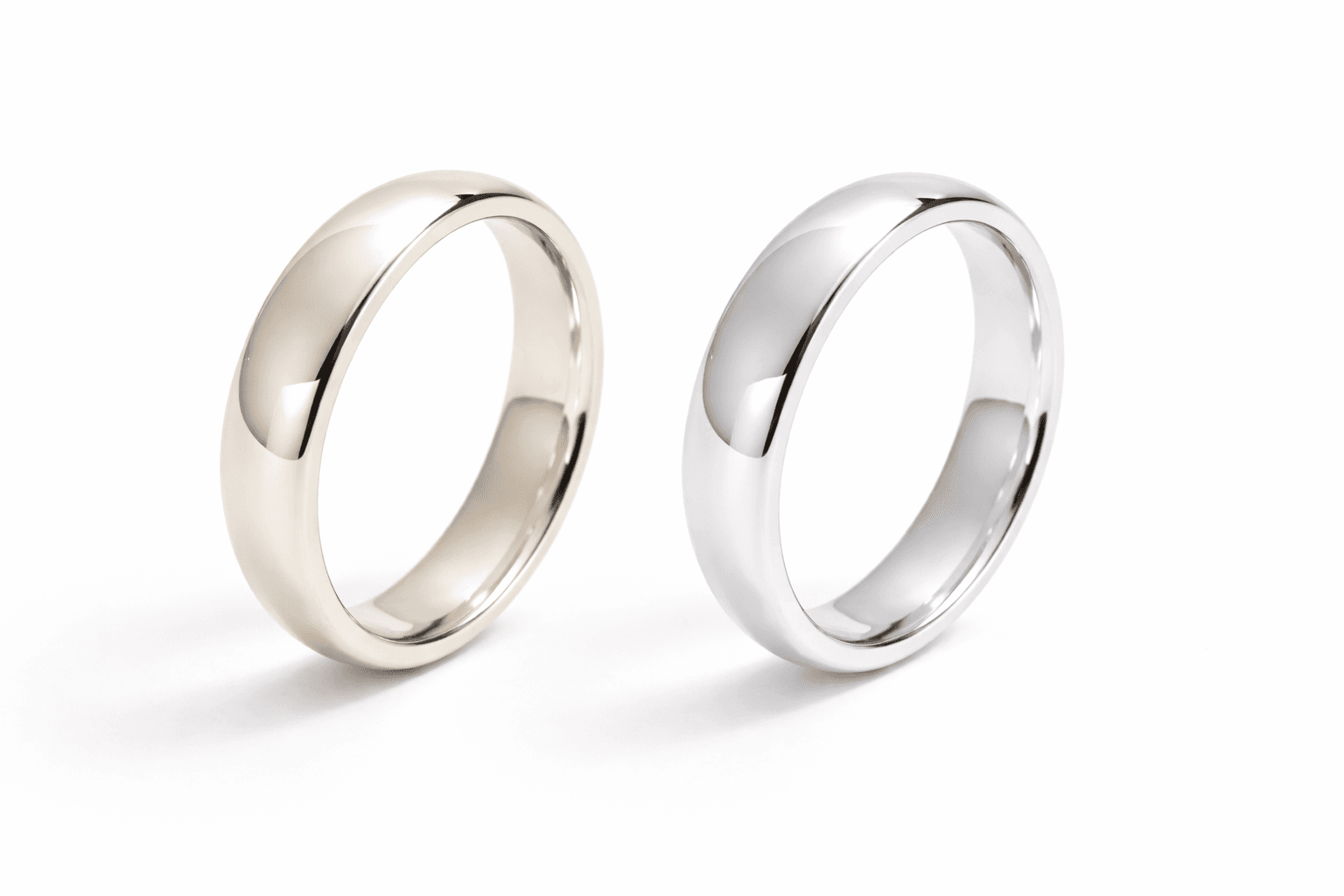
White gold is one of the most requested metals in jewellery. It's also one of the least understood.
White gold starts as yellow gold, mixed with white metals like palladium or nickel to lighten the colour - producing a pale, slightly warm-toned alloy. That bright white you see in the display case? That comes from rhodium plating on top, and the plating wears away.
What that means in practice
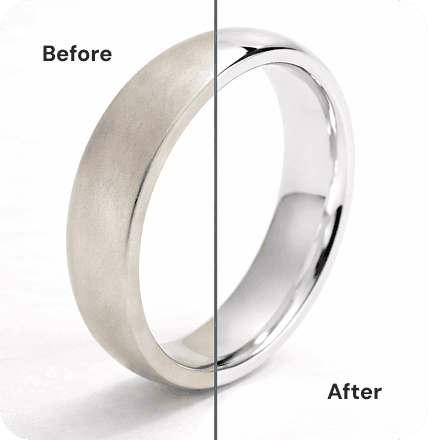
Over time, the rhodium plating wears away unevenly, revealing patches of yellow as the underlying alloy begins to show through - until it’s fully exposed and no longer looks like what you originally bought.
Replating every year is standard practice: the ring goes back to a jeweller, gets recoated, looks new again. For some people that's fine, but this hidden cost is worth knowing about before you buy.
It's a legitimate metal - we just don't use it.
White gold is well suited to diamond and gemstone settings. There's a reason it's popular.
But at Unified Metals, we don't work with metals that rely on temporary platings to look the way they're supposed to. A surface that wears away is a surface with an expiry date. White gold is a premium metal underneath a non-permanent finish and that's a fundamental mismatch with how we think about longevity.
If you want white, here's what we suggest
Platinum is naturally white. Nothing applied, nothing to maintain, no reversion over time. What you see is what the metal actually is.
We'll always tell you what your options are and what each one means in real use.